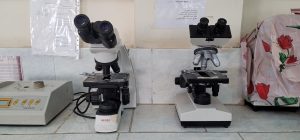
Physiology Laboratory
The Physiology Laboratory is an educational and research facility that enables the study and understanding of how different organs and body systems function through scientific experiments and interactive applications. The laboratory is used to study physiological concepts, connect theoretical knowledge with practical application, and train students in examining vital functions and taking vital signs such as blood pressure and electrocardiograms (ECG).
Objectives of the Physiology Laboratory
- Enhancing Practical Understanding: Linking theoretical knowledge with practical application of physiology concepts.
- Developing Skills: Improving students’ abilities to conduct scientific experiments, measure physiological functions, and analyze data.
- Understanding Body Mechanisms: Studying how organs and systems function under normal healthy conditions.
- Supporting Scientific Research: Encouraging research in physiology to understand diseases and develop new treatment methods.
Laboratory Activities and Experiments
- Measuring Vital Signs: Measuring blood pressure, heart rate, and examining respiratory system functions.
- Electrocardiography (ECG): Learning how to record and analyze heart electrical activity.
- Blood Tests: Performing different blood tests such as bleeding time and hematocrit.
- Organ Function Tests: Conducting tests for heart and nervous system functions.
- Using Advanced Models and Tools: Using anatomical models and 3D applications to explore the human body.
Importance of the Laboratory in Medical Education
- Preparing Students: Preparing students for the clinical stage by developing their practical skills.
- Understanding Diseases: Helping students understand how the body works in a healthy state, which facilitates understanding diseases and their treatment.
- Improving Healthcare: Contributing to better healthcare by training students to analyze physiological cases and interpret clinical data.
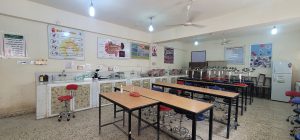
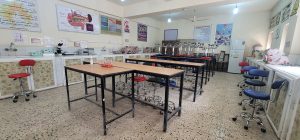
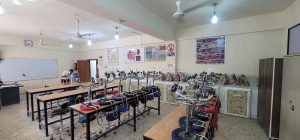
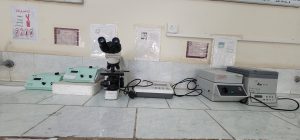
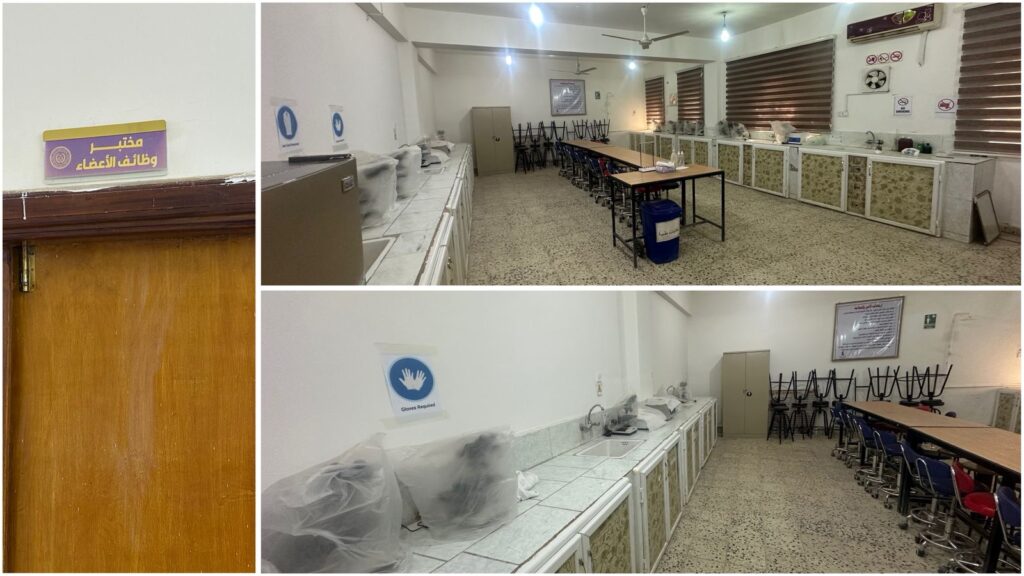
Laboratory Photos